Pump
Check valves
One-way valves above and below the pump chamber. A ball sits on a seat and only lets solvent pass in one direction.
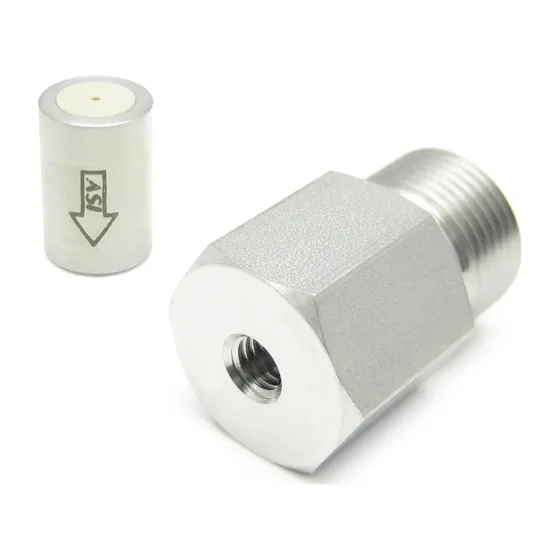 Agilent outlet valve: cartridge and housing
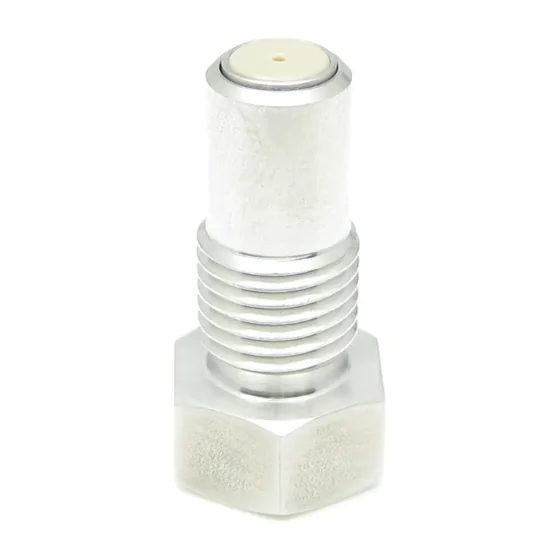 Waters Alliance inlet check valve
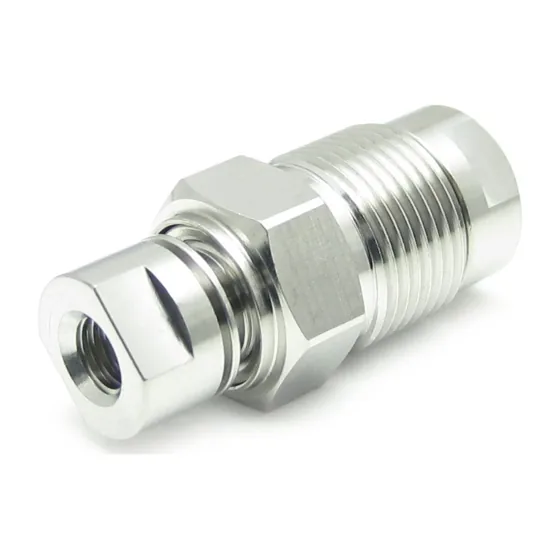 Waters ACQUITY double-ball valve
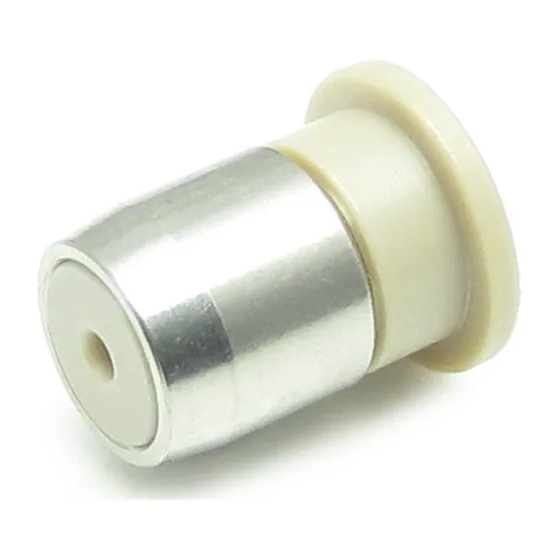 Agilent active inlet valve cartridge
A check valve is a one-way valve. In most HPLC pumps it is a small ball sitting on a matching seat. Flow in the right direction lifts the ball; flow the other way presses it down and closes the valve.
Each pump chamber has two. The inlet valve below opens when the piston pulls back and solvent comes in from the bottle. The outlet valve above opens when the piston pushes and solvent leaves for the column. If either one does not close, the pump loses part of every stroke, and you see it as pressure ripple or a flow that is not accurate.
The four parts above come from four pump designs, and they look different. IDEX describes the most common inside: a ruby ball on a sapphire seat, in a cartridge that often has an arrow for the flow direction. Agilent’s newer pumps use an active inlet valve, which has its own page.
The numbers
- Most common design
- Ball and seat; ruby ball on a sapphire seat is the most common pair 1
- Other materials
- Sapphire, alumina, zirconia; metal or metal-lined parts for higher pressure 1
- Ball size
- 1/16" to 1/8" 1
- Single or double ball
- A second ball and seat is a back-up, to delay replacement 1
- End caps
- PEEK end caps take more torque than softer PFA ones 1
- Fitting it
- Arrow on the cartridge pointing up, in the flow direction, for inlet and outlet 2
- When to replace (ASI)
- Every second time the piston seals are replaced 3
- Agilent outlet valve materials
- Stainless steel, gold, ruby, zirconia-based ceramic, tantalum 4
Same part, different names
What goes wrong
- Pump loses prime, pressure near zero, or pressure swingsCheck: A blocked or faulty check valve. Waters: sonicate it, then replace it if needed. 5
- Pressure ripple after switching solventsCheck: A sticky check valve. Waters lists it in its pressure-fluctuation checks. 6
- Valve leaks after you tightened it hardCheck: Over-torque. It can wedge the ball into the seat or crush the cartridge. 1
Check yourself
Tap an answer to see if you are right and why.
Go deeper
- Sticking check valves and how to clean themStudents A film from acetonitrile, salt crystals from a dried buffer, or too much torque. Sonication fixes the first two.
- Active inlet valve (Agilent)Students Agilent's inlet valve cartridge. There are 400 bar and 600 bar versions, and the wrong one or a worn one gives pressure trouble.
The more detailed pages (marked Students) are for students of HPLC Operation and Troubleshooting, a live group. How to become a student. Students: sign in with your email when asked.
Sources
- IDEX Health & Science, Comprehensive Guide to Check Valves: A Critical Component of HPLC Pumps (white paper). Overview, p. 3; Single versus double ball seat, p. 4; Critical attributes, pp. 5-7.
- Analytical Scientific Instruments (ASI), Check Valves Installation Instruction. steps 1.2, p. 1.
- Analytical Scientific Instruments (ASI), Maintenance and Trouble Shooting Tips for Replacement Parts (white page). p. 1.
- Agilent Technologies, Agilent InfinityLab LC Series 1260 Infinity II Isocratic and Quaternary Pumps User Manual (G7111). Materials in the flow path, p. 70.
- Waters Corporation, Check valve failure (WKB117811). WKB117811, cause and fix.
- Waters Corporation, Pressure fluctuation on Alliance HPLC System, guided troubleshooting (WKB96127). WKB96127, troubleshooting order.
New modules by email
All the modules are open now, and I keep adding parts and checks. Leave your email and I will send you what's new, including the Empower pages.
My HPLC newsletter too, about once a week. Unsubscribe any time. Privacy